Arc flash testing shows whether a secondary substation is truly safe
For us, it goes without saying that our products must be completely safe – both for operating personnel and for the public. That is why we follow applicable standards and carry out type testing, for example when it comes to arc fault protection.
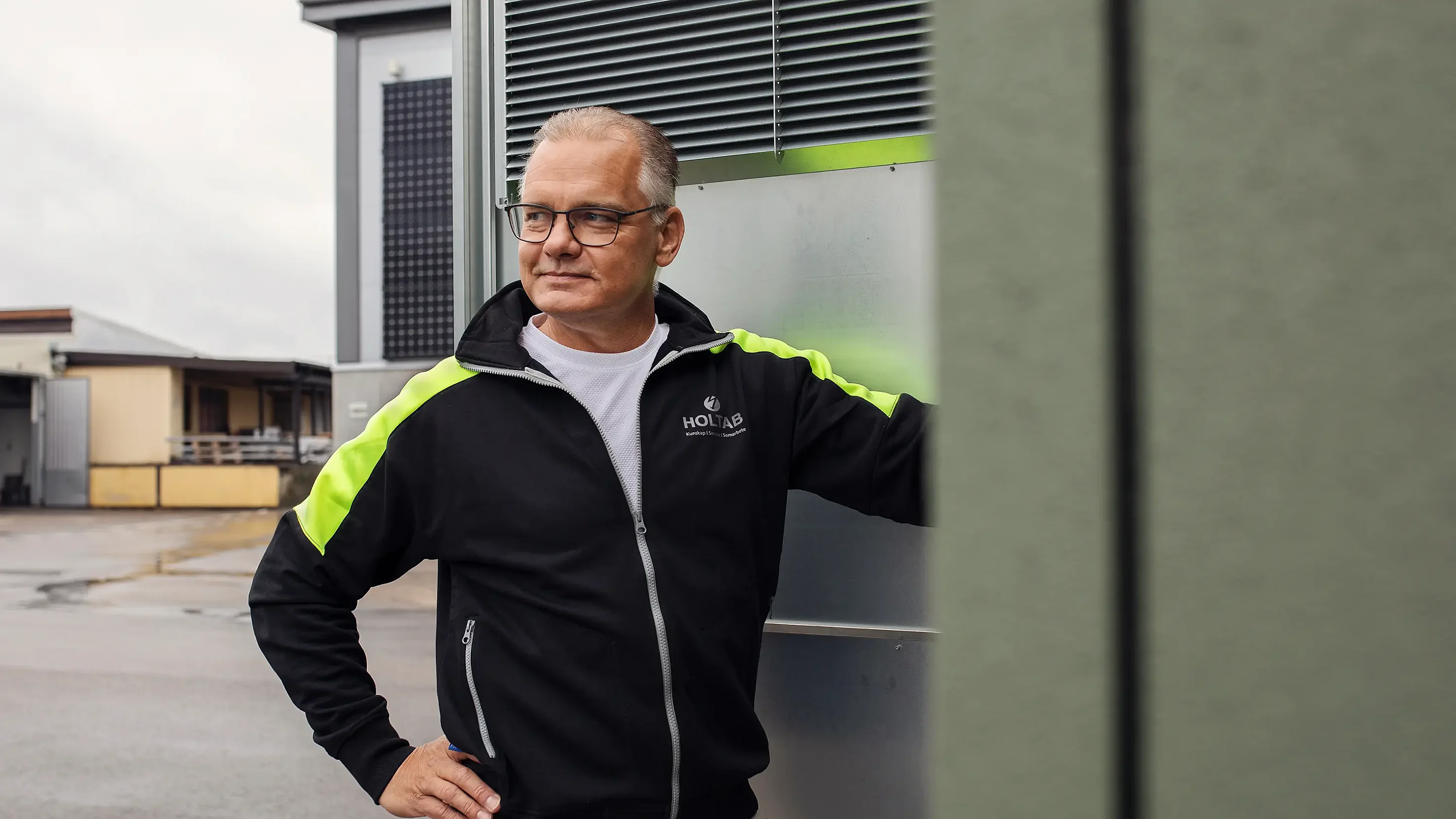
“We are uncompromising when it comes to safety in our switchgear and stations. That’s why we don’t rely solely on calculations or compliance with standards – we carry out full type tests of all our power solutions,” says Gordon Gunnarsson, Product Manager at Holtab.
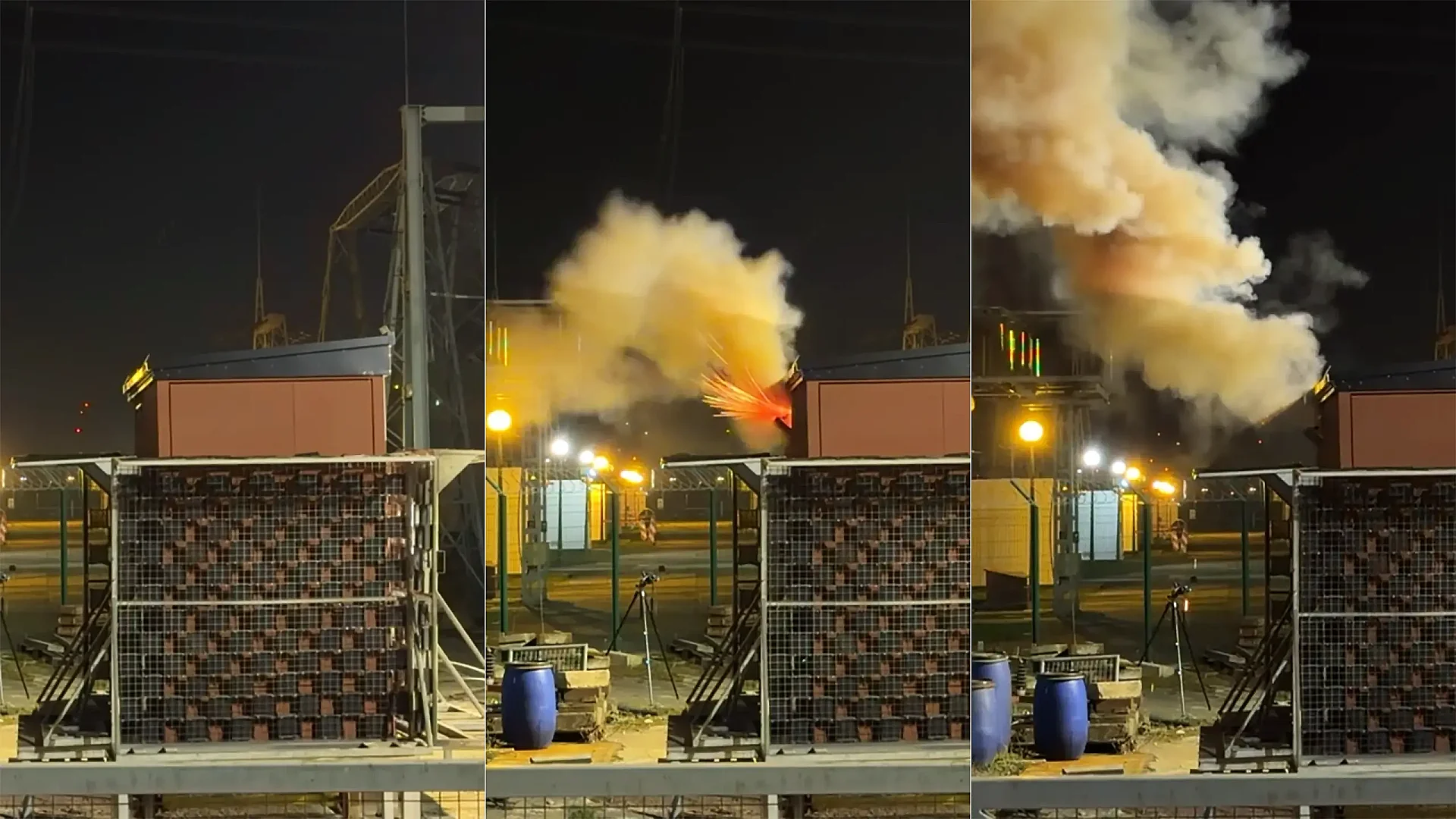
An arc flash in medium-voltage switchgear is a sustained electrical discharge that continues until the protection system interrupts the current. During that short moment, it effectively turns into a type of explosion.
The pressure wave can destroy equipment and even cause structural collapse, while the extreme heat can severely burn people and vaporize materials, releasing highly toxic gases. On top of that, the light is blinding and the noise is deafening.
“An arc flash can occur due to insulation failure, incorrect operation, ageing or material fatigue. For people, it is potentially life-threatening – which is exactly why testing is so important,” says Gordon.
Beyond theory
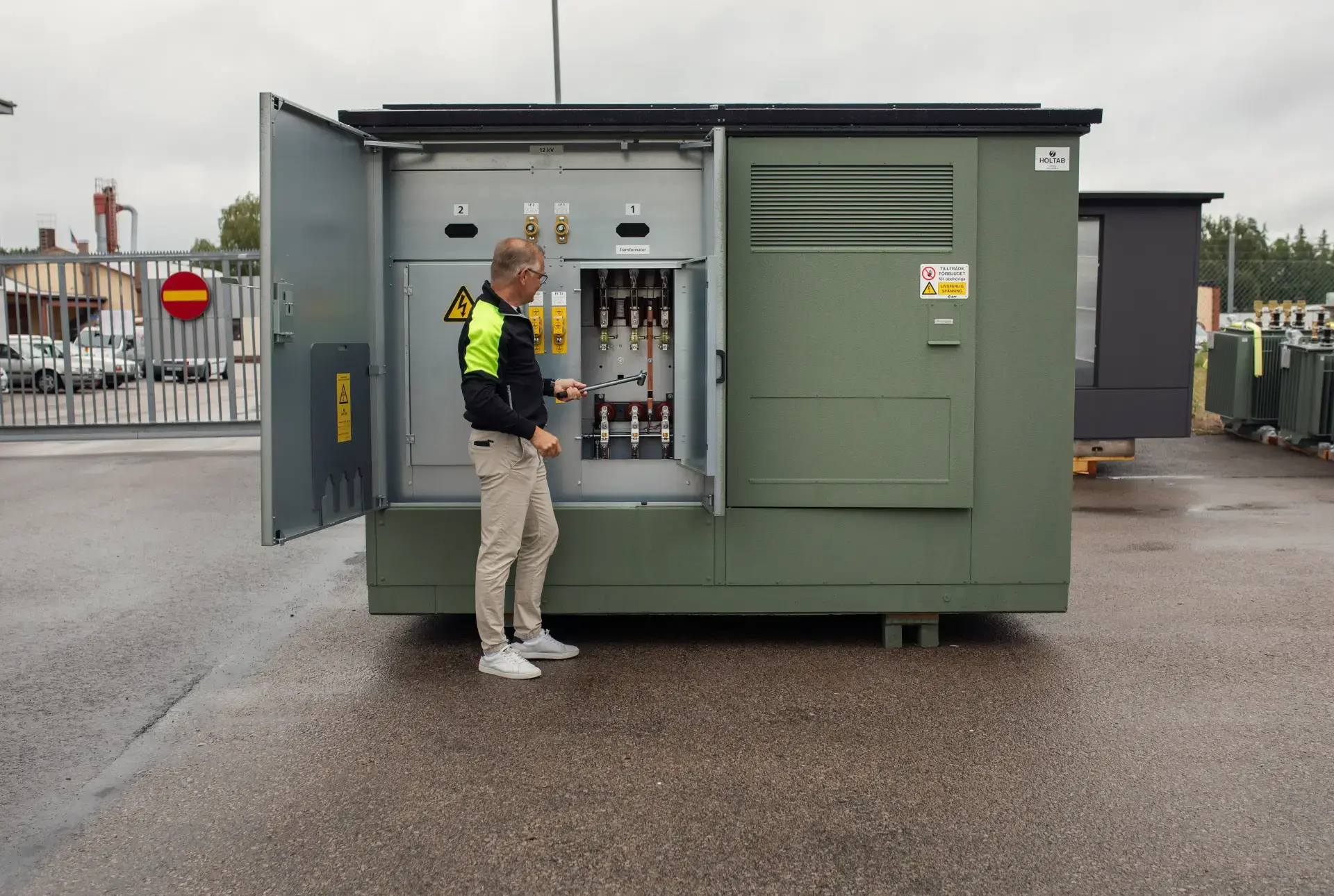
Testing always includes two scenarios: one with the doors open – simulating work inside the station – and one with all doors closed – ensuring that no one outside is harmed. Only when both tests are passed is the power solution approved for delivery to the market.
“A station is expected to stand in the field for 40 years. You can’t rely on assumptions – it’s practical testing that gives us clear proof that the design holds up,” he says.
In the European market, the regulatory framework is clear. For secondary substations and technical buildings, the international standard IEC 62271-202 applies, including the IAC-AB classification for arc fault protection.
This means the installation must be tested with both open and closed doors. Holtab always tests its products according to these requirements.
“We always test the switchgear in its actual configuration – inside the substation or technical building itself. We don’t rely on theoretical calculations and assume it works. We transport the entire construction to an accredited, independent laboratory and carry out full type testing. That’s the only way to be completely sure,” says Gordon.
A natural investment
Arc flash testing is resource-intensive and costly, but for Holtab it is a natural part of the development process.
“I’ve personally taken part in a large number of tests at independent institutes over nearly two decades working in this field. Meeting the IEC standard gives you a formally correct solution – but we also want to know how it performs in reality before delivering it to the customer.”
Safety thinking runs through the entire company. Holtab develops prefabricated power solutions that are tested and ready for installation, with the goal of creating value for people and society.
“For us, it’s about responsibility. Anyone working in one a Holtab station should feel safe. That’s how we build sustainable solutions for the future,” Gordon concludes.
Read more:
Would you like to learn more about how we work with safety? Watch the film series Safe and Sound.